Picture this.
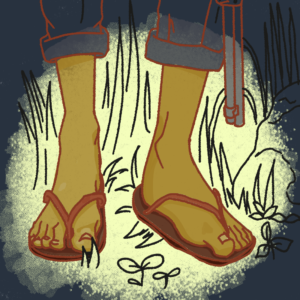
Women, men and children were all dressed up in their Sunday’s best, the most fashionable from their baul (chest or trunk used to keep clothes). “Inilalabas nila sa baul ang magagarang damit,” related Ka Indo, a Party cadre in the Visayas. Some women even wore lipstick and men had kept hair. Eagerness and fervor were evident on their faces.
Throughout the years, and in many regions across the country, the elections in guerrilla zones is akin to a town fiesta. Heaps of sumptuous meals may not be there, but the ambiance is definitely that of a joyful celebration. It speaks of how important elections are for the masses. For one, the establishment of a Barrio Revolutionary Council (BRC), a rudimentary form of the organs of political power of the new Republic, is a significant leap in the development of the revolutionary movement. It speaks of the strength and consolidation of the masses and their capacity to govern themselves.
The people’s power to choose
In one of the regions in Visayas, Ka Indo recalled how, on the day of the elections, the masses milled around the polling place—a big tent set up in an open space, surrounded by blackboards made of waterproof sheets with the names of the nominees written on it for the final tally of votes. At the center of the polling place, the nominees’ name were flashed on a screen through a portable projector.
Coming from different sitios within the mountain village or barangay, they were mostly members of revolutionary mass organizations of peasants, women, and youth who were ready to vote for the officials of their BRC.There were also middle forces from the various NDF cells. Yes, even non-members of organizations may join and vote, especially in consolidated barrios, as long as they believe in the revolution.
At stake in the elections were the positions for the chairperson and vice chairperson for the different committees, which are decided after the elections and during the first meeting of the Council. Known mass leaders and active members of the revolutionary mass organizations of peasants, women, and youth are commonly nominated for these positions because of their record of service to the community. But in some areas, there are also others who would seek nominations.
From among the elected officers, nomination for committee heads is open, usually for the committees on education, defense, health, and production and what the council would deem necessary. But a committee on women is always guaranteed.
Like most of the BRC elections, nominations in this particular election is done publicly but voting is through secret ballot. All classes and sectors are represented in the BRC with the revolutionary mass organizations, the middle forces and allies, and members of the Party each hold a third of the total number of seats. The minimum voting age is 15 years old to allow members of the Kabataang Makabayan (Patriotic Youth) to participate.
“Nominees were given time to introduce themselves but there was no need to campaign because the voters very well know each other,” said Ka Indo. “When the final tally of votes was done, the elected officers took their oath, delivered their acceptance speeches onto the highly-awaited picture shoots,” added Ka Indo with a smile.
Computerized elections NPA style
Members of the New People’s Army (NPA), like Ka Indo, acted as Comelec—in what community members and NPA called “computerized election ala NPA.”
“Actually, the computerized election is simply the use of a laptop computer and excel program projected on screen,” said Ka Indo with laughter in her voice.
Community members take delight in the use of these computers, watching excitedly how names and votes are plotted out and flashed on screen as votes were tallied. They matched the figures on screen and those written on the blackboard surrounding the hall.
“The masses prefer the NPA to facilitate the elections because it is non-partisan. Some illiterate or senior voters even choose NPA red fighters to assist them with their ballots instead of their family members or blood relatives,” Ka Indo said. Aside from the taking charge of the actual elections, the red fighters also prepare the ballots to be used. On the side, some of them babysit toddlers who tagged along with the mothers.
Election preps
While most BRC elections take only a day, the preparation is a long process and a product of years of hard work of arousing, organizing and mobilizing the masses under the guidance of the Party branch in the locality.
Before a BRC election can be held, the Party ensures that basic mass organizations of peasants, youth and women are established and the community is cleared of enemy assets. The masses also undergo education on the role of the BRC to prepare them to choose wisely and make the BRC function in reality.
Ideally, elected BRC officials have term limits but the conduct of elections also depends on the security situation in the guerrilla fronts, the location and the size of the gathering, and the support of both armed and unarmed members of the surrounding communities, among others.
Ka Indo elaborated,“kahit consolidated ang communities pero sa maraming dako ng baryo manggagaling ang mga dadalo nagiging mahirap para sa security, lalo na sa malalaking baryo. Kapag ganun, mga representatives na hinalal ng kanilang mga grupo na lang ang nagtitipon (Even if communities are consolidated but there are many areas involved, the security situation poses difficulties, more so in big barrios. In this case, only representatives elected by their organizations gather).” But once the situation allows, general elections is immediately held.
But, Ka Indo continued, there was an instance when they were able to gather around 350 people despite the presence of a detachment in a nearby mountain range. This was their biggest gathering for a BRC elections, she said. On occasions like this, the militia from other barrios are mobilized to augment the security forces.
In case BRC elections cannot be held yet, the heads of the revolutionary mass organizations take the lead, coordinating with each other to deliver the needed services to the community such as literacy centers and other projects. They, too can arbitrate complaints or cases presented by members of the community.
Working with indigenous peoples
Establishing revolutionary mass organizations and revolutionary councils is done with due diligence in communities of indigenous peoples considering their own traditional structures and cultural practices.
In Ka Indo’s experience, contending leaders of different clans caused long debates during council meetings, making it difficult for the council to reach agreements. To prevent this, painstaking education work among traditional leaders are undertaken. Such education is a must because the combination of traditional leaders with newly developed mass leaders, though producing a dynamic mix of revolutionary leadership, can sometimes stall development if not handled correctly.
In some areas in Mindanao, traditional leaders who are not elected are gathered in an advisory council to the BRC, enhancing their traditional leadership role in the revolutionary organizations. Younger IP leaders, who are in the line-up of succession based on their customary laws, are more often elected in the BRC, bringing with them new ideas. The young leaders make sure their elders are consulted on important matters concerning the community, keeping the balance of modern revolutionary ideas and practices with the indigenous wisdom of their culture.
Both practices are efforts of the revolutionary movement to merge positive aspects of traditional leadership, customs, and traditions of the indigenous peoples and their revolutionary aspirations.
Revolutionary vs reactionary elections
Culling from the feedback of the masses, Ka Indo highlighted the difference between the revolutionary movement and that of the reactionary state in the conduct of elections.
“Sinasabi ng masa na ang eleksyon sa ilalim ng rebolusyonaryong kilusan ay pinakamalinis na eleksyon, walang bayaran, bukas at walang pananakot (the masses say the revolutionary elections are the cleanest they experience because there is no vote-buying, it is transparent and there is no harassment or intimidation),” said Ka Indo.
It is also distinguished by its transparency, “lahat pwede magbantay, magmonitor sa panahon ng eleksyon pati na sa pagbibilang ng resulta (everybody can monitor the conduct of the elections and its results),” Ka Indo added. There has never been an election protest, no expenses for campaigning and vote-buying.
Whenever there are signs of a barrio standing up for the people’s rights and welfare, fascist government forces rush to crush the people’s duly elected revolutionary government. Harassment, hamletting, illegal arrests, massacres and aerial bombings seek to destroy the people’s unity and force them to betray their elected officials. But the people go on secretly. In cases where the BRCs are deactivated by the arrest or killing of the leaders, revolutionary organizations just wait for the military operations to abate, review whatever setbacks had been inflicted, and hold elections once again. Many barrios all over the country have undergone building and rebuilding BRCs throughout the revolutionary movement’s long history.
The building of barrio revolutionary committees are seeds planted nationwide that eventually leads to the establishment of the People’s Democratic Republic of the Philippines (PDRP) upon the victory of the national democratic revolution. The creation of the BRC has brought to life the Guide to the Establishment of the People’s Democratic Government which outlined the basic principles and structures of people’s governance, a document issued by the Communist Party of the Philippines as early as October 1972. (Iliya Makalipay) ###
Related articles:
People’s democratic government establish in Barangay Sugar
On building the people’s democratic government
Mass base consolidation in Cagayan Valley founded on agrarian revolution
Reaping gains towards more victories
CPPs 48th anniversary: The masses revolutionary power at work